


Why CFOs Can No Longer Keep Up With Finance Technology Alone

There has never been a more overwhelming moment to work in finance. Which, given how much of the past decade has involved spreadsheets and manual reconciliations, is saying something.
For years, finance systems changed slowly. You chose your accounting software, fought with it occasionally, renewed the licence, and carried on. The pace was manageable because the tools were stable. That is no longer true.
AI arrived and embedded itself into finance workflows so quickly that the landscape shifted before most teams had finished evaluating the previous wave of tools. Today, new capabilities emerge monthly. Entire processes are being rebuilt. For many CFOs — especially those working fractionally, across multiple clients, or inside fast-growing companies — the challenge is no longer about finding the right tool. It is about keeping pace with a function that is changing faster than any individual can monitor.
The Finance Technology Stack Is Expanding Faster Than Anyone Can Monitor Alone
AI-driven analytics, automated reconciliation, real-time dashboards, forecasting models, API-native tools — the list of categories alone has expanded significantly in the past two years. Every CFO wants to adopt the right solutions. Few have the bandwidth to test new products, evaluate feature updates, and anticipate which tool will genuinely improve their workflow versus which one will introduce new complexity.
This is where learning in isolation stops working. A CFO who tries to stay current by reading alone will always be behind the CFO who is testing tools with peers and comparing notes in real time.
What Knowledge-Sharing Actually Looks Like in Practice
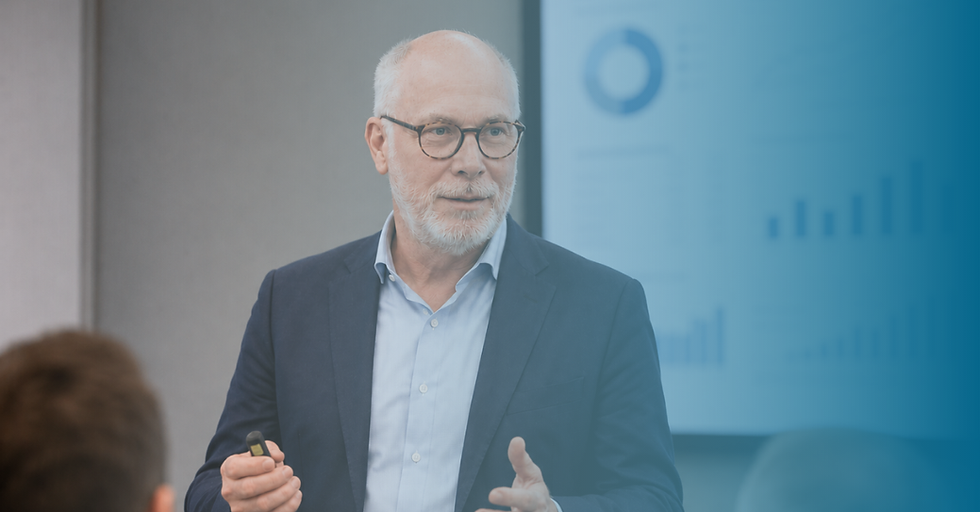
Several of the fractional CFOs in the Peak Consulting network recently gathered for a working session led by Stephan Geyer, who specialises in process optimisation for German clients. He walked the group through Rows.com — a German-built spreadsheet tool with an integrated AI data analyst — not as a demo, but as a practitioner sharing how it fits into a real CFO workflow.
CFOs from Germany, the UK, and Spain joined the session. All of them work in different markets with different client profiles. The common thread was straightforward: stay ahead together, because none of them could do it alone.
That kind of session — practical, peer-led, grounded in real use — is the difference between a network and a community. One gives you a directory. The other gives you a competitive advantage.
What This Means If You Are Hiring a CFO
For CEOs evaluating finance leadership, this shift has a practical implication. Technical competence is no longer sufficient on its own. A CFO who is not actively learning — not genuinely plugged into what is changing in tools, workflows, and best practice — will fall behind. And the CEO depending on them will feel it before it is named.
A fractional CFO working inside an active knowledge-sharing network offers something different. They spot better tools earlier because someone in their network has already tested them. They avoid expensive mistakes because a peer has already made them. They bring real intelligence about what is working now, across multiple client contexts — not just inside one company.
When a CEO hires a well-connected fractional CFO, they are not hiring one person. They are, in practice, accessing the collective experience of the community behind that person.
The Practical Question to Ask Any CFO Candidate
Ask them how they stay current. Not whether they read industry newsletters. Ask whether they are part of a community that continuously tests tools, shares workflows, and compares notes on what is actually working in the field.
That question will tell you more than a CV.
What We Have Built at Peak Consulting
The Peak Consulting network is structured around exactly this principle. Our fractional CFOs test tools together, share what works and what does not, and exchange real workflows across markets and client contexts. Sessions like the one Stephan led are a regular part of how the community functions.
If you are a CEO looking for CFO-as-a-Service support and want to understand what that looks like in practice for your business, we are happy to talk through your situation.

Comments